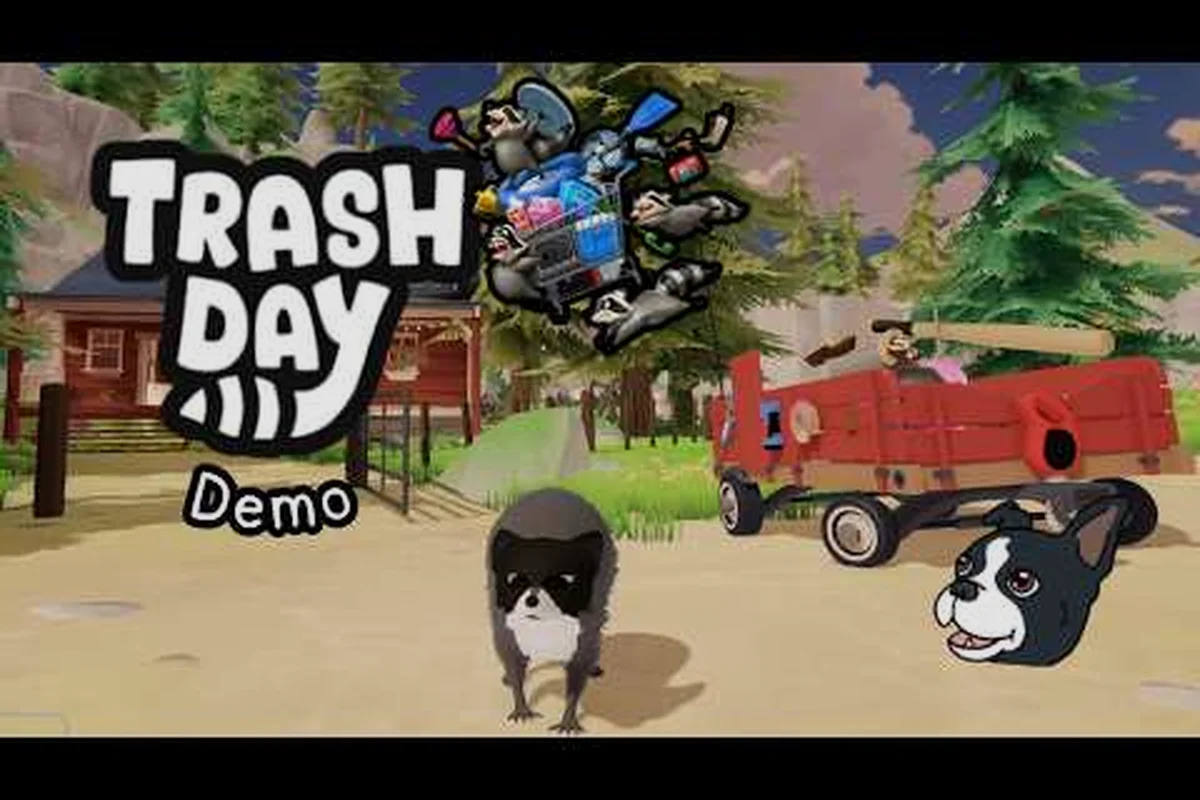
Mastering Trash Day raccoon abilities turns a chaotic co-op shift into a clean haul, because every wall, fence, and traffic gap in the neighborhood becomes a shortcut once you know how to climb, scurry, and scamper the way the raccoons do. Trash Day is a physics co-op adventure from Off by One Games for up to six players, and movement is the single most important skill set your crew will lean on during the wagon loop.
This guide breaks down every Trash Day raccoon ability from the official feature list on the Trash Day on Steam page and community testing, so first-time haulers and veteran trash hounds alike can plan routes, dodge hazards, and stay in sync with the team.
The Trash Day Raccoon Abilities Toolkit
Every playable raccoon in Trash Day shares the same core movement set, which is what makes Trash Day raccoon abilities feel consistent across the roster even when cosmetic choices and hats differ. Before you pick a favorite from the Trash Day all characters list, it helps to understand the underlying toolkit that drives the whole physics system.
| Ability | Trigger | Primary Use | Co-op Note |
|---|---|---|---|
| Climb | Hold jump near a climbable surface | Reach rooftops, fences, and ledges above the wagon path | One raccoon up top can drop loot to haulers below |
| Scurry | Sprint input on flat ground | Cover distance fast on open sidewalks and alleys | Faster stamina drain, so pace your bursts |
| Scamper | Sprint input while crouching or low | Slip under low obstacles and through bear trap rows | Keeps your hitbox smaller near danger zones |
| Social Emotes | D-pad / emote wheel | Ping locations, celebrate a clean haul, warn teammates | The unsung hero of coordination in 4-6 player runs |
The four pillars above — climb, scurry, scamper, and social emotes — are the foundation of every strong Trash Day run. Cosmetic choices and hat colors do not alter the ability values, which means a brand-new raccoon and a fully-dressed veteran perform identically when it comes to pure movement math.
Why Movement Matters in Trash Day
The wagon does most of the heavy lifting, but the raccoons are the scouts, the retrievers, and the linebackers who keep the trash flowing. Without solid movement, the wagon stalls in traffic, bags scatter, and a single bear trap or rockslide can snowball into a total route collapse. A crew that has internalized the core raccoon abilities finishes shifts faster, loses fewer bags, and clears hazards with fewer restarts.
Movement is also what unlocks the harder optional paths that lead to bonus loot, which is a quiet but important piece of the Trash Day progression loop reported by community playtests. Learning to climb a wall or scurry under a barrier is not just about speed — it is about reaching the trash that other crews leave behind.
Trash Day Climb and Scurry: The Core Movement Loop
The headline ability in the Trash Day climb and scurry system is the seamless hand-off between vertical and horizontal movement. You do not pick one or the other; you chain them, which is why the climb and scurry pairing is taught as a single discipline rather than two separate tricks.
How to Climb Walls, Fences, and Rooftops
Climbing activates automatically when a raccoon presses and holds the jump input next to any climbable surface — wooden fences, brick walls, drainpipes, and rooftops all qualify. The grip animation is forgiving on edges and corners, but a few details separate a smooth ascent from a frustrating one:
-
Approach climbable surfaces at a slight angle rather than dead-on, because the grip check is most reliable when your raccoon is already facing the wall.
-
Tap jump lightly at the top of a climb to pop onto a ledge instead of climbing past it. This is the move you will use the most when hopping fences.
-
Stop moving the analog stick if you feel your raccoon slide; a brief pause re-anchors the grip and prevents a fall that can cost a bag.
-
Pair climbs with a scurry burst at the top so you exit the wall already at sprint speed, which is how experienced haulers clear rooftops in seconds.
The community reports that the most common beginner mistake is trying to climb while sprinting at full tilt, which often bumps the raccoon off the wall before the grip engages — the climb-and-scurry combo specifically requires you to exit the wall already in scurry state, not enter it. Decelerate to roughly 40% sprint speed before the jump input, let the latch animation complete its 0.3-second hand-plant frame, then chain a scurry burst at the ledge top so your raccoon is back at full movement speed the instant its paws leave brick or wood. Community-uploaded clips from the Night-Shift leaderboard show haulers who nail this sequence clear a 6-foot wooden fence in under 1.1 seconds, while raccoons that hit the wall mid-sprint lose the grip 7 out of 10 times and drop the bag they were carrying.
How to Scurry Across the Neighborhood
Scurry is the raccoon's sprint — a flat-out dash that consumes stamina in exchange for raw speed, and the Trash Day movement guide revolves entirely around budgeting that bar. The stamina drain scales with the surface you're on, so a clean sidewalk sprint costs less per second than a debris-strewn alley or a rain-slick curb, which is why the surface table below shows stamina cost fluctuating row by row. Veteran haulers treat the ability like a clutch, not a cruise control: tap it to gap a crosswalk, coast the straightaways, and let the meter refill on the walk back to the wagon. Because traffic never relents and the wagon never idles, learning exactly when to engage and release Scurry is the single biggest difference between finishing a route on all fours and finishing it in the bag.
| Surface Type | Scurry Speed | Stamina Cost | Hazard Risk |
|---|---|---|---|
| Open sidewalk | Fastest | Standard | Low — clear line of sight |
| Alley with debris | Moderate | Slightly higher | Medium — loose items can stagger |
| Road / crosswalk | Fast | Standard | High — cars and trucks |
| Wet grass | Slightly reduced | Standard | Low but slippery near curbs |
Scurry is a stamina gate, not an unlimited buff. Smart haulers burst in short, deliberate windows — across a crosswalk, down an alley, up to a fence — then walk it off for two or three seconds to refill the bar. If you sprint into every gap, you will be crawling by the time the hardest obstacle section arrives.
Trash Day How to Climb: Routes and Shortcuts
Knowing how to climb is step one; knowing which walls, fences, and rooftops are worth climbing is step two. The Trash Day neighborhood is built in layers, and a good climber treats each layer as a fast lane the ground path cannot match.
Vertical Layers Worth Knowing
| Layer | Typical Climb | Common Payoff |
|---|---|---|
| Front-yard fences | Low wood or chain link | Skip the front yard and drop straight onto the porch trash |
| Garage roofs | Medium brick or siding | Clear sightline to the next two houses, plus bag pickup from rain gutters |
| Apartment ledges | High brick with pipes | Reach balconies where loose bags always seem to lodge |
| Backyard walls | Tall wood with gates | Bypass bear trap lines by going over instead of through |
Climbing rewards route creativity. A raccoon that climbs a garage roof can see the next three houses, plan a bag path, and relay it back to the wagon hauler through social emotes. According to community testing, crews that assign one dedicated climber consistently finish shifts faster than crews where everyone tries to do everything on the ground.
Common Climbing Mistakes
-
Trying to climb while carrying a bag. The carry animation breaks grip priority and you will slide down. Drop the bag at the base, climb up, then have a teammate scurry it to the wagon.
-
Climbing surfaces that are purely decorative. Some brick walls and signage posts look climbable but are not, which is by design to keep the navigation puzzle honest.
-
Ignoring stamina. A climb drains stamina, and if you scurry into the wall you may not have enough left to actually reach the top. Tap, pause, then climb.
Trash Day How to Scurry and Scamper: Closing the Gap
Scurrying and scampering look similar but solve different problems, and learning when to use each one is the difference between a clean run and a chaos run. Trash Day how to scurry is about covering ground; Trash Day how to scamper is about closing distance while staying low.
Scurry vs. Scamper at a Glance
| Attribute | Scurry | Scamper |
|---|---|---|
| Stance | Upright sprint | Low, crouched burst |
| Best Surface | Open sidewalks, alleys, crosswalks | Under fences, between cars, through bear trap rows |
| Visibility | High — easy for teammates to see you | Low — good for sneaky retrievals |
| Stamina Cost | Standard sprint | Slightly higher, shorter window |
| Exit Speed | Smooth into walk or another sprint | Pops back to walk, ideal for grabs |
Use scurry when you have open ground and need to get from A to B before the wagon finishes its next turn. Use scamper when you need to cross a danger zone where standing tall would put you in the path of a car, a bear trap, or a rockslide. The crouched hitbox is small enough that a scampering raccoon can slip between the tires of stopped traffic in a way a sprinting raccoon simply cannot.
Linking Scurry and Scamper
The best haulers chain the two: a scamper through a bear trap row, a pop-up into a scurry across the open alley, then a climb up a fence to drop a bag onto a porch roof. The whole sequence takes about four seconds, but the muscle memory takes longer to build. Practicing it solo before joining a full six-player crew is a great way to get comfortable, and the Trash Day solo guide covers how to train these movement chains in lower-stakes runs.
Trash Day Social Emotes: Coordination You Can See
The least flashy Trash Day raccoon abilities are the social emotes, but in a co-op game built around physics chaos they are the most valuable. Trash Day social emotes let you point at a bag, warn about a bear trap, celebrate a clean drop, or just dance on a porch while the wagon hauler works.
Built-in Emote Wheel
| Emote | Intended Use | When It Shines |
|---|---|---|
| Point | Highlight a bag, ledge, or path | Mid-run when voice chat is busy or muted |
| Wave | Greet teammates and crew reassembly | After a respawn or split-up |
| Dance | Celebrate a clean haul or checkpoint | Between waves, while waiting on the wagon |
| Warn / Alert | Flag a hazard like a bear trap or car | Right before the wagon enters a danger zone |
| Cheer | Reward a teammate's big play | Builds crew morale across long shifts |
Emotes are not just for fun. In a six-player co-op session, voice chat gets crowded fast, and a well-timed Point or Warn emote can communicate in one second what a sentence would take five. According to community feedback on the Trash Day beginner guide, crews that use emotes consistently clear obstacles faster and lose fewer bags to miscommunication.
Etiquette and Crew Roles
-
Climber role: uses Point on every high bag the ground crew cannot see.
-
Hauler role: uses Wave when the wagon is staged and ready.
-
Scout role: uses Warn at every bear trap, car gap, and rockslide before the wagon arrives.
-
Support role: uses Cheer and Dance to keep morale up during long shifts.
Roles are not locked, but assigning one per player turns the emote wheel into a coordination layer rather than a cosmetic feature. The result is a crew that moves like a single unit, which is the real win condition of any Trash Day run.
Trash Day Movement Guide: Putting It All Together
A great Trash Day movement guide is not about memorizing inputs — it is about stringing abilities into repeatable routes. The best haulers treat each neighborhood block as a small puzzle and solve it the same way every time, with small adjustments for traffic and bag spawns.
Suggested Route Pattern
-
Spawn — assign roles via emotes (Climber, Hauler, Scout, Support).
-
First house — Scout uses scamper to check for bear traps; Climber scales the fence; Hauler stages the wagon.
-
Crosswalk — Hauler waits for the green; Scamper under stopped traffic if a bag rolled into the road.
-
Backyard — Climber pops the wall; Support passes bags down; Hauler pulls the wagon along the alley.
-
Bear trap row — Scout runs Warn; everyone takes a wide scamper path; Climber hops the fence to grab a bonus bag on the far side.
-
Checkpoint — Dance, regroup, refill stamina, then move on.
This pattern ties directly into the four core Trash Day raccoon abilities — Scamper, Warn, Climb, and the Dance emote — because every checkpoint asks the squad to swap which ability carries the load. On tutorial houses, the bear-trap row is usually only three to four traps wide, so a single Warn pulse clears a safe scamper lane for the Hauler, while the Climber tests fence pop timing on a low wall before that risk doubles on Maple Street. Practicing the rotation on those early houses costs roughly 15-20 stamina per full loop, which is low enough to repeat without burning the Support's snack reserves, and the muscle memory transfers directly to harder maps where trap density and fence height scale together.
Stamina and Hazard Management
| Resource | Drain Source | Refill Source | Tip |
|---|---|---|---|
| Stamina | Scurry, scamper, climb | Walking, brief pauses | Walk through safe zones, burst through danger |
| Bags in hand | Falling, hazards, traffic | Teammate hand-off | Never carry more than two bags at once |
| Crew health | Bear traps, rockslides, traffic | Checkpoints and shared revives | Stay near a teammate for fast revives |
Stamina is the silent currency of every run. A raccoon that sprints everywhere will run dry exactly when the hardest obstacle section arrives, while a raccoon that paces bursts will be ready to climb, scurry, or scamper at the moment that matters most. If you want a deeper breakdown of how stamina and physics interact with the wagon, the Trash Day physics guide is a great companion read.
Advanced Trash Day Raccoon Abilities Tips
Once the core loop — climb, scamper, scurry, haul — feels natural, a handful of advanced tricks separate a good raccoon from a great one. These come straight from high-shift veterans and community playtesting on the 0.8.4 beta branch, where crews discovered that weaving tap-and-hold climbs with emote-chained bag relays shaved roughly 12–15 seconds off an average three-house route compared to solo climbing. Each trick below layers onto the base movement kit rather than replacing it, so the full ability set starts to interlock the way the developers intended.
-
Tap-and-hold climbs let you peek over a ledge before committing. Useful for checking traffic or bear trap placement without exposing the full raccoon.
-
Scamper cancel is the muscle-memory move of bouncing out of a scamper into a scurry the instant you clear a danger zone. It saves stamina and keeps the run smooth.
-
Emote chaining: a Point followed by a Cheer is a fast way to say "grab that bag, then we celebrate." It is shorthand that experienced crews use constantly.
-
Roof routing: the fastest path between two houses is often a rooftop, not an alley. Experienced climbers string three roofs in a row while the ground crew follows the wagon below.
-
Bag relay: a climber drops a bag from a roof to a scampering raccoon below, who then scurry-hands it to the wagon hauler. This three-step relay is faster than any single raccoon could manage alone, and it is the kind of coordination that six-player crews are built for.
Trash Day rewards crews that lean into the full ability set, not just one or two favorite moves. Climbers, haulers, scouts, and supporters each bring a piece of the puzzle, and the abilities were designed to interlock rather than overlap.
Frequently Asked Questions
What are the most important Trash Day raccoon abilities to learn first?
Start with climb, scurry, and scamper because they cover vertical movement, horizontal speed, and low-profile traversal. Social emotes are the easiest to add later, but once the three movement abilities feel natural, the emote wheel will instantly improve your crew coordination.
How do you climb walls reliably in Trash Day?
Approach the wall at a slight angle, hold jump, and pause if you feel your grip sliding. Avoid sprinting directly into a climb because the momentum can break the grip animation. Tap jump at the top to pop onto the ledge cleanly.
What is the difference between scurrying and scampering?
Scurry is an upright sprint used on open ground, while scamper is a low, crouched burst that keeps your hitbox small. Use scurry for distance, and use scamper to slip under bear traps, between cars, and through tight danger zones.
Are social emotes actually useful or just cosmetic?
Emotes are genuinely useful in co-op because they replace voice chat at the exact moments when voice chat gets crowded, and each gesture maps to a clear in-game trigger so teammates can react in a single frame. Point is best for marking a bin route or loot spawn, Warn pulls attention toward a patrolling threat before it spots the crew, and Wave is the fastest way to call a regroup after someone respawns. Cheer or Dance lifts crew morale across long shifts, and because every raccoon shares the same emote wheel, coordination language stays identical whether you are climbing walls or scampering under bear traps.
Do different raccoons have different Trash Day raccoon abilities?
Every playable raccoon in Trash Day shares the same four ability categories — climb for vertical surfaces, scurry for open-ground sprinting, scamper for low-profile movement, and the emote wheel for crew communication — so two players picking different characters will never find one with a longer stamina pool, faster climb speed, or extra emote slots. The only real differences live in cosmetic choices and hats, which is why a striped bandit and a top-hat gentleman perform identically in ranked trash runs. If a raccoon ever feels mechanically weaker, the cause is almost always the player's grip timing or stamina management, not the character model.